

DARSHAN
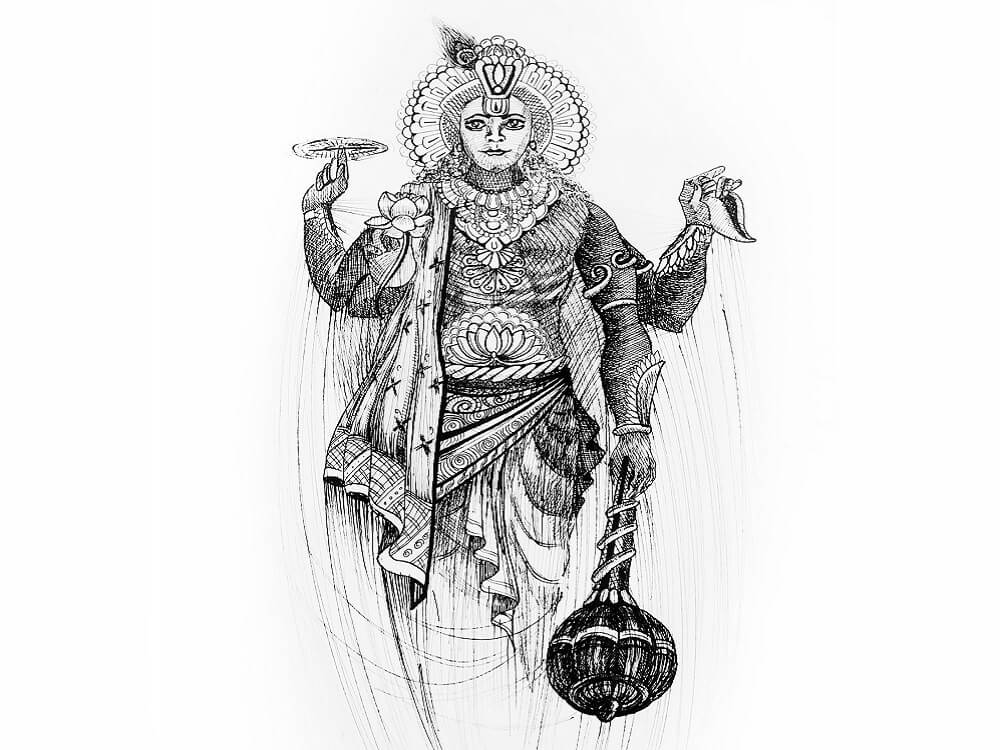
माधव: पाण्डवश्चैव दिव्यौ शङ्खौ प्रदध्मतु: || 14 ||
-Shrimad Bhagavad Gita Adhyay 1, Shloka 14
Darshan, literal meaning of Darshan means to view, it usually refers in context of “as to view” (to look) the Deity or to view Divine. However, subtle meanings of darshan are stance, philosophy, ideology or simply view point. Many translations of Gita give Chapter-1 title as “The Yoga of Dejection of Arjuna”. But it is far from the truth. As per my Darshan (perspective) first Adhyay contains the dilemma of Arjuna. This quandary was a result of his outlook. His plight was outcome of his values and his stance. The chapter 1 contains various points of view of various characters of Mahabharat. In fact, the first sholka of Bhagavad Gita was not from Shri Krishna but from Dhritrastra describing his point of view.
धृतराष्ट्र उवाच-
धर्मक्षेत्रे कुरुक्षेत्रे समवेता युयुत्सवः |
मामकाः पाण्डवाश्चैव किमकुर्वत सञ्जय ||1|
Translation: Dhritarashtra said- O Sanjay, after gathering on the holy field of Kurukshetra, and desiring to fight, what did my sons and the sons of Pandu do?
-Shrimad Bhagavad Gita Adhyay 1, Shloka 1
We can clearly see that Dhritrastra’s point of view is clearly handicapped, due to his blindness. The blindness of King Dhritrastra is not lack of eyesight, but the lack of ability to see reality. His darshan is blindfolded by his ego, envy, and absence of empathy.
He called Kauravas as “my son”, but Pandavas as “son of Pandu”, not my nephew. Thus, exclude them as members of family. He is partial and bias, he gave moniker to battlefield as “Kurukshetra”-areas of Kuru or (battle) field of Kurus.
First few verses of Adhyay-1 indicate the darshan of Sanjay (Sanjay’s philosophy). In Mahabharat, Sanjay has super-power of infinite eyesight but he is mere servant of Dhritrashtra, he has no authority. Hence, Sanjay’s point of view is very objective as he knows that he has to describe what he show on battlefield as facts only and deprived his narration from his personal views and emotions.
However, his objective views are treated with agitation and irritation by Dhritrastra, who cannot see “eye to eye” with others. This is real blindness according to Gita- the blindness of mind not blindness of eyes.
Here, we can differentiate between Sanjay’s darshan and Dhritrastra’s darshan, both are on same the side of the war and both possess power. Sanjay has power to view infinity but has no power to do anything about it; while Dhritrastra as a king has ability to make great changes but he is blinded. It is an irony of both, that in spite possessing great deal of powers both are incapable to establish Dharma (justice and harmony). So, in Gita we can “see” that only having objective darshan-view point is meaningless if you cannot implement your philosophy. It is the very first indication in the war of Mahabharat that war is the only option because “those who can differentiate between right and wrong are not in power, and those who are in power wants to right their wrong.”
In beginning of Adhyay-1 of Shrimad Bhagavad Gita display the darshan of Duryodhana mainly from verses 2 to 11. He is filled with hatred and envy; even he holds the command of eleven Mahasena (great army) compares to seven Mahasena (great army) of Pandavas. Here, numbers are clearly in his favour including great warriors like Bhishma and Dronacharya who are virtually invincible and Pandavas will not draw their weapons against their “Guru” and “Great Grandfather”.
अपर्याप्तं तदस्माकं बलं भीष्माभिरक्षितम् |
पर्याप्तं त्विदमेतेषां बलं भीमाभिरक्षितम् || 10||
Translation: The strength of our army is unlimited and we are safely marshalled by Grandsire Bheeshma, while the strength of the Pandava army, carefully marshalled by Bheem, is limited.
-Shrimad Bhagavad Gita Adhyay 1, Shloka 10
Duryodhan’s vision is filled with his anger because he fills he was the true heir of the thrown like his father but striped away from the entitlement. Though he can clearly see (perfect vision) his vision is inhibited by his father’s blindness.
आचार्या: पितर: पुत्रास्तथैव च पितामहा: |
मातुला: श्वशुरा: पौत्रा: श्याला: सम्बन्धिनस्तथा || 34||
एतान्न हन्तुमिच्छामि घ्नतोऽपि मधुसूदन |
अपि त्रैलोक्यराज्यस्य हेतो: किं नु महीकृते || 35||
निहत्य धार्तराष्ट्रान्न: का प्रीति: स्याज्जनार्दन |
पापमेवाश्रयेदस्मान्हत्वैतानाततायिन: || 36 ||
तस्मान्नार्हा वयं हन्तुं धार्तराष्ट्रान्स्वबान्धवान् |
स्वजनं हि कथं हत्वा सुखिन: स्याम माधव || 37||
Translation: Teachers, fathers, sons, grandfathers, maternal uncles, grandsons, fathers-inlaw, grand-nephews, brothers-in-law, and other kinsmen are present here, staking their lives and riches. O Madhusudan, I do not wish to slay them, even if they attack me. If we kill the sons of Dhritarashtra, what satisfaction will we derive from the dominion over the three worlds, what to speak of this Earth? (35)
O Maintainer of all living entities, what pleasure will we derive from killing the sons of Dhritarasthra? Even though they may be aggressors, sin will certainly come upon us if we slay them. Hence, it is not our duty to kill our own cousins, the sons of Dhritarashtra, and friends. O Madhav (Krishna), how can we hope to be happy by killing our own kinsmen? (36,37)
-Shrimad Bhagavad Gita Adhyay 1, Shloka 34-37
In the beginning of Gita, Shri Krishna told Arjuna that “Arjun! You are free from sin, hence I am providing the wisdom of Universe to you and you only.”
So Adhyay 1 is very important for all the readers who seek the knowledge. We must understand the dejection of Arjuna to digest the knowledge from Gita.
In entire epic of Mahabharat, Arjuna was described as man with eyes of Archer, means he is highly focused and never loses the sight from his target. He can penetrate the eye of flying bird without being distracted by beauty of clouds floating above the birds or magnificence of trees under it, until the day of war.
On the first day of war on the battle field he lost his focus and started viewing enemy as family. His plight was clearly visible in the verse 28 to 46 of Adhyay 1. Arjuna was confused and tells Krishna that “O Krishna! I don’t want to kill them even if they kill me, just of the sovereignty of three words HOW, THEN, FAR this land; what joy can we drive through the slaying of the son of Dhritrastra? Sin alone; will accrue to us as the result of killing this desperados. For how shall we be happy after killing our own kinsman?” Arjuna asked Krishna that he sees family members and friends at both sides. How can he slaughter the family for rights over property?
Here, we can see the difference between Arjuna’s point of view and Dhritrastra ego. Both belongs to same clan, both are the great grandsons of Bhishma, both are the students of Dronacharya, both are exposed to same kind of teaching and training yet there Darshanpoint of view of the same situation is vastly different.
| Warriors | Reasons |
| Bhishma | Bhishma Pratigya (Great Promise): He took the vow to stay loyal to thrown of kingdom but doing so he fought against the Yudhishthir; whom he believed should be the king of Hastinapur. |
| King Shalya | Wrongfully taken Promise: Shalya was maternal uncle of Sahdev and Nakul. He was con by Ashwasthama and Dushasana, by pretending to be Sahdev and Nakul. They took promise from King Shalya to fight from their side. |
| Guru Dhrona | Putra Prem (Love for offspring): Ashwasthama-the son of Dhrona blackmailed him to remain loyal to his friends Duryodhana in spite of clear will of Dhrona to stay away from war because he did not want to spill the blood of his own students. |
| Karna | Mitra Dhrama (A debt of Friendship): Even after he acquired the knowledge that he, by birth is Kunti Putra (son) and eldest of Pandavas; hence he is true heir of the thrown. He felt that his loyalty belongs to his friend Duryodhan who stood by him when everyone else rejected him. |
| Vikarna | Bhatru- Dhrama (Duty of Brotherhood): He is the only one out of 100 Kauravas who tried to stop during the sinful act of ‘Chirharan’. But as a brother he stood by his brothers. |
There are many more including formal mentioned warriors who thinks it is their Dharma (duty) to stand alongside the Kauravas in spite of their personal point of views are either neutral or are in favour of Pandavas.
Here, we can clearly see that there real understanding of Dharma is inhibited by their short sight and kinship. Moreover, they believe that they are doing Dharma (following rightful path of duties) in spite of their act of Adharma (Sin / following wrongful acts).
LIMITATION CAUSE BY FLAUD DARSHAN
Dhritrastra and Dhronacharya both have set clear boundaries on their vision regarding who are their friends and foe; while Arjuna sees beyond this division of enemy and friends and see family members on both the sides, also evaluated the situations on the basis of his subjective perspective, attention (dhyana), and awareness (Darshan). In Adhayay 2, Shri Krishna talks about Sampurna Darshan which is foundation of “Dharma” and Dharma is a foundation of society.
Adhayay 1 teaches us to be like Arjuna to look beyond the boundaries of our emotions and preconceive notions. Hence there is no judgement, no wrong, no right, not mine, not yours. Darshan-Point of view should be objective, if darshan is subjective like Duryodhan or Karna or even Bhishma, you are not doing righteous acts (Dharma). You are thinking that you are right, but you could be wrong for someone else’s darshan. So, Gita in Adhyay 1 focus on the development of the philosophy arrived from the facts; the attention of details, awareness without involving judgements, and any preconceive notion. It teaches us to look beyond the boundaries of good and evils, likable and unlikable, happiness and sadness.
सञ्जय उवाच-
एवमुक्त्वार्जुन: सङ्ख्ये रथोपस्थ उपाविशत् |
विसृज्य सशरं चापं शोकसंविग्नमानस: || 47||
Translation: Sanjay said- Speaking thus, Arjun cast aside his bow and arrows, and sank into the seat of his chariot, his mind in distress and overwhelmed with grief.
-Shrimad Bhagavad Gita Adhyay 1, Shloka 47.