

DHANWANTARI TRAYODASHI / DHANTERAS:
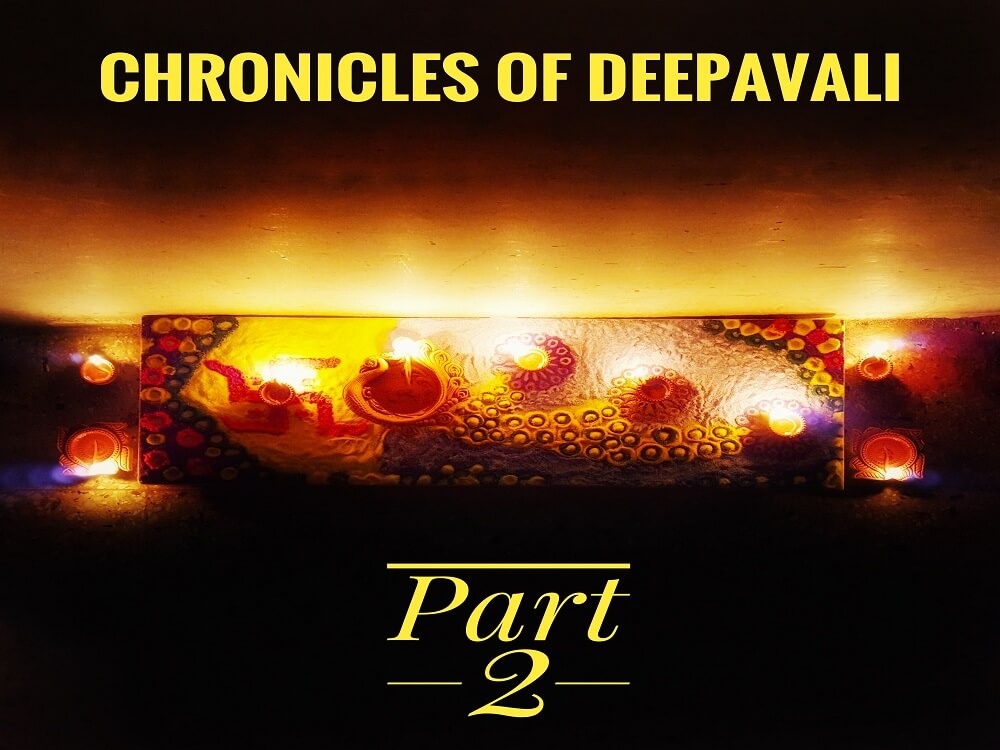
अन्वेषितं च सविधिं आरोग्यमस्य।
गूढं निगूढं औषध्यरूपम्,
धन्वन्तरिं च सततं प्रणमामि नित्यं॥
Dhanwantari Trayodashi or Dhan Teras is observed on 13th Lunar day of Krishna Paksha (dark fortnight) of Kartik/Ashvin month of Hindu Lunar calendar. During the Samudra Manthan, Dhanwantari- the God of Ayurveda, science of long and healthy life arose from the ocean of the milk holding Amruit Kalash (Pot filled with elixir of immortality). This day is celebrated in the honour of the God Dhanwantari who is believed to be incarnation of Lord Vishnu.
There is a strong scientific rationing behind this. Deepavali marks the beginning of the winter season, during these cold months various aspect of life change drastically. Sun, who is the biggest source of energy start moving in southward direction, days become short and cold, prolonged night and harsh climate. These changes are responsible for onset of various mental and health issues.
If you observe the nature in this season, you may notice that life started slowing down, many animals go to hibernation, birds migrate to warmer climate, and most of the seeds do not sprout. As per the various studies, cases of depression and suicides increase in this season.
As a human, we cannot stop our routine life or go to hibernation to avoid these changes. To give protection during this unforgiving climate ancient Rishimunis developed a method to keep moral high until Sun starts moving in northward direction. Lighting a lamp (diya) and cracking firecrackers are small part of this method. There is also long lost tradition of ‘Prabhatferi’ where people sing devotional and folk songs before the dawn on the street to wake everyone before the Sunrise. So that entire community gets benefits from the sunrays during winter months and can start their day with energy boost. Drawing various Rangolies is also integral part of this method. Colourful rangloies attract positive energy, inspire people, increase creativity, and improve focus. Unfortunately, we have degraded these methods by creating rangolies without understanding its meaning and create noise pollution with fire crackers instead of creating positive sound energy.
Furthermore, most of us know this day as Dhanteras, which includes traditions like worshipping Maa Lakshami goddess of wealth and buying precious metals and stones as a token of acquiring wealth in upcoming year.
Please don’t think that it is very unfortunate event, where we have replaced our health with the wealth. It is true that ‘health is wealth’, but like everything else in the life balance is also very important between these two. One cannot enjoy his wealth if he is unhealthy. In the same way one cannot maintain his health if he is poor.
नमस्तेस्तु महामाये श्रीपीठे सुरपूजिते।
शङ्खचक्रगदाहस्ते महालक्षि्म नमोस्तु ते।
Salutations to you O Great Maya, One who resides in Sri Chakra and is adored by the Gods, One who holds the Conch-shell, the Discus and the Mace, I worship to thee, Sri Maha Lakshmi.
On this auspicious day, many people ignite the lamp (deep) and put them in front of the door (Southward direction) to please Dharmaraj Lord Yama. To live healthy live long life we require three things health, wealth, and blessings of God. First two is more or less comes under the efforts of human beings and we pray God Dhanvantari and Goddess Lakshmi respectfully. But the third factor, blessing of God to prevent unnatural death is not in our hand, we are totally depend on the blessing of Yamraj. So to enlighten a lamp symbolise that we are doing our best efforts to achieve all three factors to enjoy long and happy life.
कार्तिकस्यासिते पक्षे त्रयोदश्यां निशामुखे।
यमदीपं बहिर्दद्यादपमृत्युर्विनिश्यति ।।
-Skada Puran
On the 13th dark fortnight day of Kartik month igniting lamp and keep it outside the home after the dusk for Yamraj will prevent unnatural death.
Hence, celebrating different ideologies on a same day teach us the lesson of balance. This day is very significant for achieving healthy and wealthy life in new-year. Health can be physiological, physical, or spiritual; the same way wealth can be materialistic and spiritual.
Ministry of Ayurveda, Yoga & Naturopathy, Unani, Siddha & Homeopathy declared this day as “National Ayurveda Day”.
NARAKA CHATURDASHI / KALI CHAUDAS:
Narka chaturdashi or Kali Chaudas is observed on 14th Lunar day of Krishna Paksha (dark fortnight) of Kartik/Ashvin month of Hindu Lunar calendar. Many festivals are the celebration of the birth or some kind of achievement, but Naraka Chaturdashi belongs to a group of very few festivals which are celebrated to honour the death of someone.
As per Vishnu Puran and Bhrama Puran, Naraka was very pious person who was the son of Aditi (Goddess Earth) and Varah (third incarnation of Vishnu). Varah lifted earth out of cosmic ocean. Goddess Aditi requested Vishnu to bless their sun with longevity. Achieving ling life and no fear of death Naraka motivated by his desire conduct various sins. Wage the war against the kingdom of both heaven and earth. He kept 16000 women as a prisoner with the help of his war general Mura.
Shri Krishna who is eight incarnation of Vishnu on the request of Satyabhama (belived to be incarnation of Aditi) challenged Naraka for the war. With the help of Maa Kali and Satyabhama, he first killed the Mura hence Krishna also called Murari, and then slay Naraka, freeing all 16000 women from Naraka’s bondage.
On the last moment of his life, Narakasura realise that how he wasted all his life, inspire of being descendent of the God. He lived his life like Asura (Danav), hence he was known as Narakasura. After realising his mistake, Naraka asked Satyabhama to remember his death as not the death of Narakasur but the death of all wrongful acts and deeds conducted by him. And people should celebrate his death with colourful lights, this is also one of the reasons we celebrate Deepavali with colours and light as a reminder to kill our inner demon.
Like Naraka, who was born as son of God but was corrupted by his desires. Our good qualities like patience, integrity and honesty can be easily overshadowed by few weaknesses like greed and envy. We always have a choice weather we should develop our good qualities in spite of living in worst condition like Shri Krishna who was born as cow gazer but remained divine, or capitulate in front of our desires like Narakasura who was born in divine lineage but ended up as asura due to his corrupted desire filled mind.
Naraka Chaturdashi symbolizes the constant ongoing battle between good and evil. We should always celebrate the death of our bad qualities (evil like anger, distrust, lack of integrity, corruption, lust, envy, sloth etc) and continuously re-establish our virtues (like faith, integrity, honesty, compassion, optimism, passion, respect, gratitude etc.).
बन्धुरात्मात्मनस्तस्य येनात्मैवात्मना जित: |
अनात्मनस्तु शत्रुत्वे वर्ते तात्मैव शत्रुवत् || 6||
-Bhagvad Gita Chapter 6
For those who have conquered the mind, it is their friend. For those who have failed to do so, the mind works like an enemy.
Another name of Naraka Chaturdashi is Roop Chaudas. It is also known as Kali Chaudas. Maa Kali, who is the ferocious form of Maa Durga killed Raktabija on this day. Raktabija was demon who got blessing by the God that even a single drop of him if fall on the surface of the earth will become another Raktabija (clone of him) hence making him virtually indestructible. So Maa Kali use her tongue to leak the blood coming out from Raktabija wound given by Chandika and in this manner killed him.
This story symbolise that just like the single drop of Raktabija blood is capable of creating entire Raktabija, our smallest sins like anger and lying can be transferred into large problems. We have to be more active and aware to avoid this. In the same way Kali use her tongue to leak every drop of the blood and prevent the new formation of Raktabija hence breaking the loop we must use our awareness and consciousness to break the cycle of Karma, so we can achieve moksha/salvation.
तान् विषण्णान् सुरान् दृष्ट्वा चण्डिका प्राह सत्वरा।
उवाच कालीं चामुण्डे विस्तीर्णं* वदनं कुरु॥53॥
मच्छस्त्रपातसम्भूतान् रक्तबिन्दून्महासुरान्।
रक्तबिन्दोः प्रतीच्छ त्वं वक्त्रेणानेन वेगिना*॥54॥
भक्षयन्ती चर रणे तदुत्पन्नान्महासुरान्।
एवमेष क्षयं दैत्यः क्षीणरक्तो गमिष्यति॥55॥
– Shri Durga Saptashati
Seeing the devas dejected, Chandika laughed and said to Kali, ‘O Chamunda, open out your mouth wide; with this mouth quickly take in the drops of blood generated by the blow of my weapon and (also) the great asuras born of the drops of blood of Raktabija. Roam about in the battle-field, devouring the great asuras that spring from him. So shall this daitya, with his blood emptied, perish.
One interesting story is also associated with this day is, the story of Lord Hanuman and how he gets his power and the name Hanuman. Young Maruti (Lord Hanuman) misidentifies Sun as delicious fruit and tries to eat Sun. In order to protect the Universe, king of Gods Indra used the Vajra and broke the jaw of Maruti hence he was named Hanuman. ‘Hanu’ means jaw and ‘Man’ means deformed. After realising his mistake Indra and other Gods blessed the young Hanuman with various Siddhis, but also locked down his awareness about his abilities and powers until it is require in future preventing this type of incident. People worship Lord Hanuman on this day as symbol to create awareness about their ability and make sure that they are not using their powers and achievement in a mischievous way.
अतुलितबलधामं हेमशैलाभदेहं,
दनुजवनकृशानुं ज्ञानिनामग्रगण्यम् |
सकलगुणनिधानंवानरणामधीशं,
रघुपतिप्रियभक्तं वातजातं नमामि:
My salutations to Lord Hanuman, is the Son of Vayu (wind), Who is the abode of immeasurable strength, possessing a body shining like a mountain of gold, Who is like the fire for the forest like demons, Who is foremost among the learned, House of all virtues, the chief of the monkeys Rama’s beloved devotee, I salute to the son of the wind.
So all three legends associated with Naraka Chaturdashi teach us the same moral, ‘One should be always aware of his ability, powers, virtues, and limitations. One should always make constant efforts to improve their virtues and must not demise against their desires.’